
Most workplace safety conversations focus on visible risks: falls, machinery, chemicals, or electrical exposure. These are real, regulated, and actively managed. But there is another category of risk causing far more deaths each year — and it’s often not managed systematically: psychosocial risk. Over the past 15 years of working with organizations across industries, we’ve…
Tag: ehs compliance
Collaboration: Built With You, Not For You
Strong EHS programs aren’t built in isolation. They’re built with the people who use them every day. Learn how collaboration, co-design, and shared ownership lead to more effective risk management and real-world results.
Is Your Safety Committee Effective?
Most organizations have a safety committee. Meetings are scheduled, agendas are reviewed, and minutes are recorded. Yet simply having a committee does not necessarily mean it is contributing meaningfully to safety performance. We’ve explored why many safety committees underperform and what high-performing committees tend to do differently. In a follow-up article, we also outlined eight…
From Findings to Forward Momentum: Making Audits Work for You
Audits are often seen as a snapshot in time—a list of what’s right or wrong. But when used strategically, they become something much more: a tool that protects people, prevents costly risks, and strengthens leadership trust. As we close out our three-part series on the value of EHS audits, we’re shifting the focus from what…
It’s Time to Build a Workplace That Helps, Not Hurts
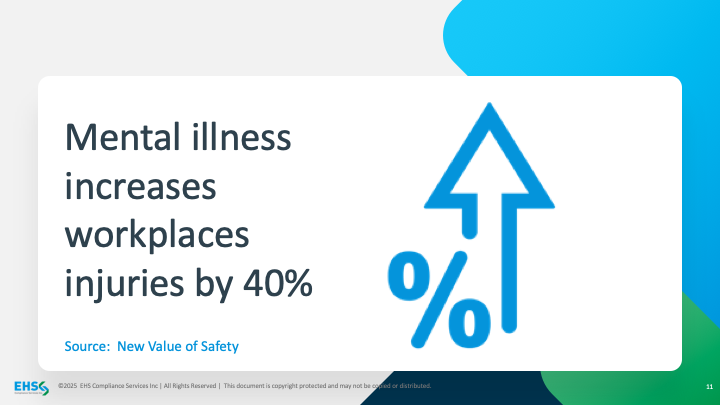
A recent NSC survey of 1,500 working adults found the average rate of injury increased from 12% for workers with no clinically significant symptoms of depression to 53% amongst those with severe depression; a similar relationship was found with anxiety symptoms.

HAZARDOUS WASTE ELECTRONIC MANIFEST (e-MANIFEST) IMPLEMENTATION AND FEES
The Environmental Protection Agency (EPA) will begin implementation and operation of the e-Manifest system on June 30, 2018. The e-Manifest requirements will be effective in all states on this date affecting to those required to use a hazardous waste manifest–generators; transporters; owners and operators of treatment, storage and disposal facilities (TSDF); and handlers of state-only…

Preparing for an Unannounced Inspection
While at a client site yesterday, I received a call that the Fire Department wanted to visit the facility. About an hour later a representative from the local fire department was on-site. Believe it or not, he wanted to see the chemicals reported on the Tier II report for the facility submitted earlier in the…
Polychlorinated Biphenyls (PBCs) Regulatory Changes Ahead
Polychlorinated biphenyls (PCBs) are a class of man-made organic materials that are desirable because of the following characteristics: non-flammable, chemically stable, have a high boiling point and electrical insulation properties. Unfortunately the same characteristics cause them to persist and bioaccumulate in the environment. In addition, PCBs
Not all bulbs are created equally
In the last post I summarized requirements for universal waste. One waste stream that falls into this category are bulbs (lamps). Did you know that not all lamps need to be managed as universal waste that, in fact, some are not even classified as hazardous waste or universal waste?
Universal Waste Requirements
Universal waste is a special category of hazardous waste that includes batteries, pesticides, mercury-containing equipment and lamps. For the most part, these wastes are self-explanatory but often confusion arises from mercury-containing equipment which includes a device or part of a device (including thermostats, but excluding batteries and lamps) that contains elemental mercury integral to its function. Some…