
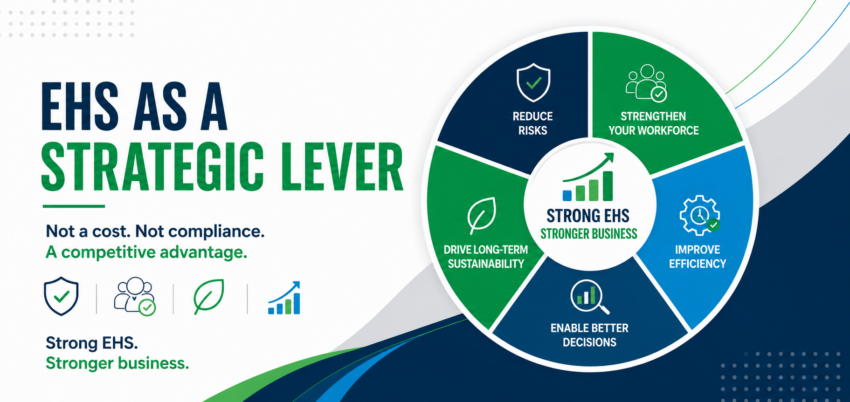
Most organizations treat EHS as a cost of doing business or overhead. The best ones treat it as a competitive advantage. There’s a conversation happening in boardrooms and leadership meetings across every industry — and EHS rarely gets a seat at the table. Budget discussions, operational priorities, workforce strategy, long-term sustainability— these are treated as business conversations. EHS…
Tag: EHS
840,000 Deaths a Year — The Workplace Risk Most Companies Are Missing
Most workplace safety conversations focus on visible risks: falls, machinery, chemicals, or electrical exposure. These are real, regulated, and actively managed. But there is another category of risk causing far more deaths each year — and it’s often not managed systematically: psychosocial risk. Over the past 15 years of working with organizations across industries, we’ve…
Collaboration: Built With You, Not For You
Strong EHS programs aren’t built in isolation. They’re built with the people who use them every day. Learn how collaboration, co-design, and shared ownership lead to more effective risk management and real-world results.
Is Your Safety Committee Effective?
Most organizations have a safety committee. Meetings are scheduled, agendas are reviewed, and minutes are recorded. Yet simply having a committee does not necessarily mean it is contributing meaningfully to safety performance. We’ve explored why many safety committees underperform and what high-performing committees tend to do differently. In a follow-up article, we also outlined eight…
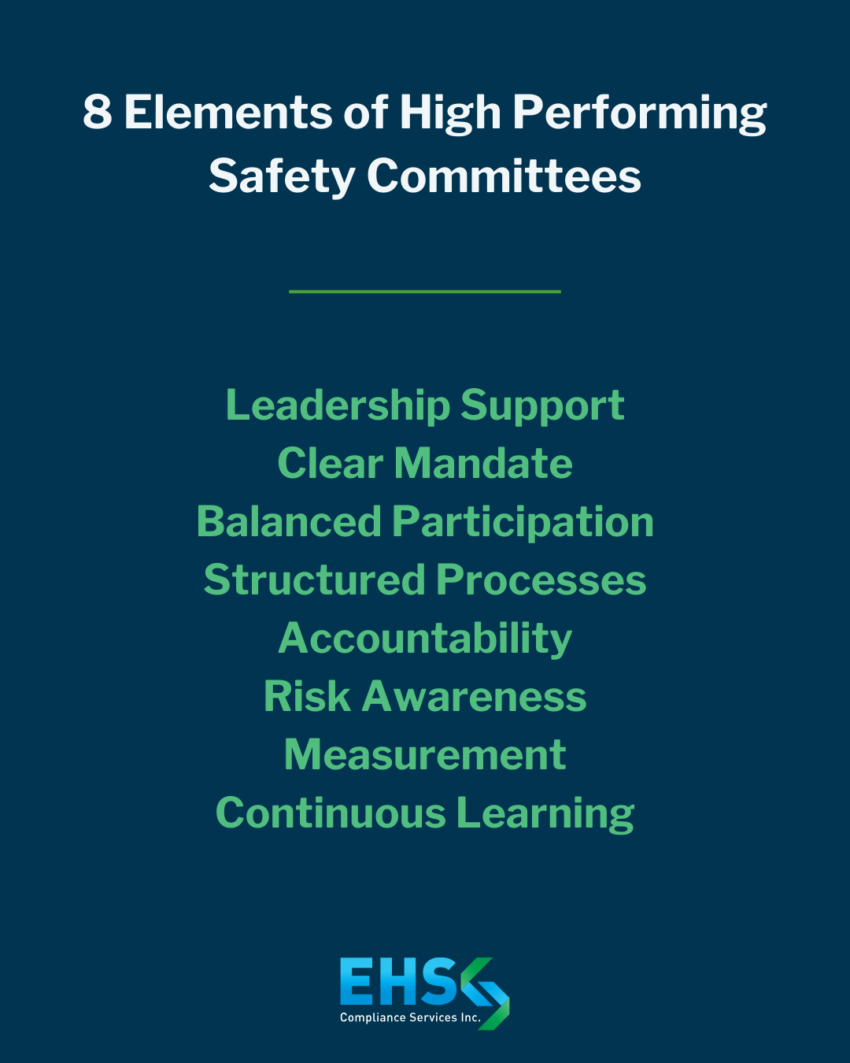
8 Elements of a High-Impact Safety Committee
In a previous article, we explored why many safety committees underperform and what high-performing ones do differently. This article builds on that discussion by outlining the elements that help safety committees move from routine meetings to meaningful impact. Most organizations have a safety committee. But relatively few have a committee that consistently drives meaningful improvements…

Why Most Safety Committees Underperform — and What High-Performing Ones Do Differently
Many organizations have a safety committee. Few have one that drives measurable impact. Committees are meant to be engines of safety leadership. Yet in many organizations, they function more like administrative review groups than strategic drivers. They meet. They review incidents. They document concerns. And then… not much changes. That’s not a commitment problem. It’s…
From Findings to Forward Momentum: Making Audits Work for You
Audits are often seen as a snapshot in time—a list of what’s right or wrong. But when used strategically, they become something much more: a tool that protects people, prevents costly risks, and strengthens leadership trust. As we close out our three-part series on the value of EHS audits, we’re shifting the focus from what…
Who Benefits Most from the 5i Psychological Health and Safety® Methodology?
In today’s complex industrial landscape, organizations are increasingly recognizing that psychological health and safety is not a “nice-to-have”—it’s a business imperative. The 5i Psychological Health and Safety® (5i PHSTM) Methodology, developed by EHS Compliance Services Inc. (EHSCSI), offers a structured, ISO-aligned framework to help organizations proactively manage psychosocial risks and foster a culture of well-being. But…
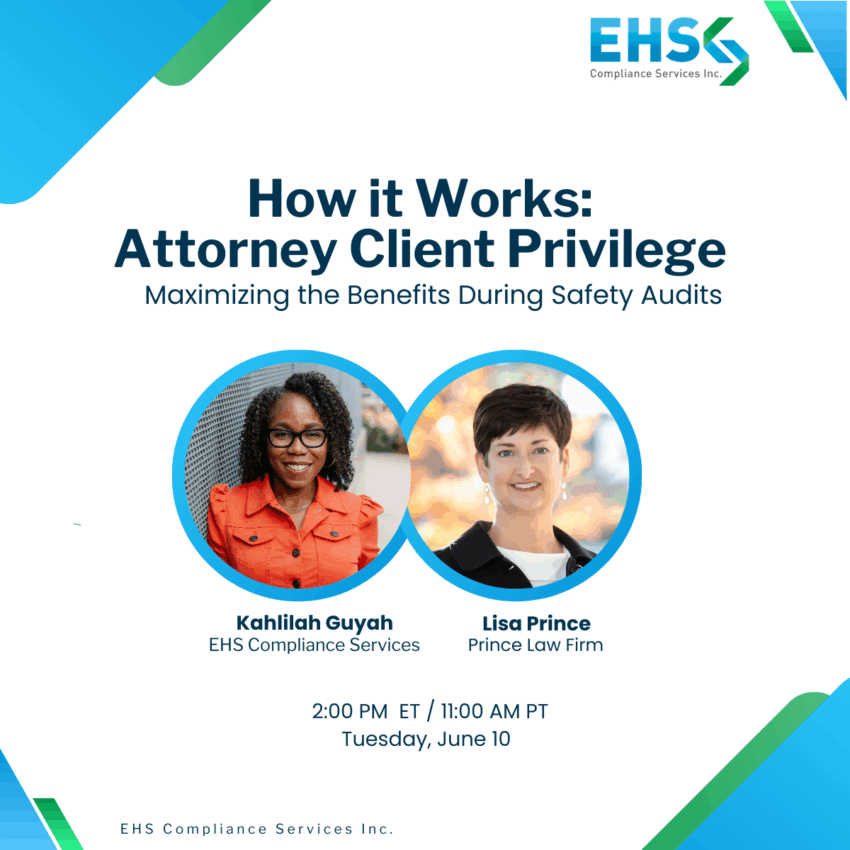
How Attorney-Client Privilege Can Protect Your EHS Audits
In today’s high-stakes regulatory environment, EHS audits are more than just checklists—they’re strategic tools for risk management, compliance assurance, and corporate integrity. But what happens when the findings of those audits could expose your organization to legal liability? That’s where attorney-client privilege enters the conversation—and where many EHS leaders find themselves on uncertain ground. Why…
Elevate Your EHS Training: A High-Level Look at ANSI Z490.1
Kahlilah Guyah, CEO of EHS Compliance Services, was a member of the technical committee responsible for the latest revision of the ANSI z490.1 standard. This update includes the merger of two older standards and establishes accepted criteria for effective environmental, health and and safety training and learning systems. First approved in 2001, the 2024 revision…