
Environmental Health and Safety (EHS) Maturity Assessment is a powerful way for growing organizations to evaluate whether an EHS strategy is keeping pace with business expansion. As organizations grow, complexity grows with them. New locations, expanding teams, evolving risks, and increasing operational demands often create a challenge many leaders do not anticipate growth can outpace alignment. While…
Category: EHS Compliance
EHS Excellence: Protecting People and Communities Beyond Compliance
There’s a version of EHS that most organizations know well. Incident reports. Regulatory deadlines. Inspection checklists. Corrective actions. All those are necessary, and we take it seriously. But it’s not the whole picture. The organizations we admire most, the ones that have built something truly meaningful and sustainable, don’t think about EHS as a compliance function. They think about it as a…
ISO 14001:2026: Powerful New Standards—Is Your EMS Ready?
The world’s most adopted environmental management standard just got a major upgrade, and the clock is ticking. If that question gave you pause, you’re not alone; many organizations are in the same position as they start to understand what this update means in practice. In April 2026, ISO officially published the updated ISO 14001:2026, the most significant revision to the world’s…
840,000 Deaths a Year — The Workplace Risk Most Companies Are Missing
Most workplace safety conversations focus on visible risks: falls, machinery, chemicals, or electrical exposure. These are real, regulated, and actively managed. But there is another category of risk causing far more deaths each year — and it’s often not managed systematically: psychosocial risk. Over the past 15 years of working with organizations across industries, we’ve…
Collaboration: Built With You, Not For You
Strong EHS programs aren’t built in isolation. They’re built with the people who use them every day. Learn how collaboration, co-design, and shared ownership lead to more effective risk management and real-world results.
Early Warning Signals in EHS: Why Near Misses and Other Risks Are Often Missed
Early warning signals are often missed when risk is not consistently understood across the organization. Learn how visibility and alignment improve EHS risk management.
Trust in EHS Systems: Why Integrity Drives Performance
Trust in EHS systems determines whether risks surface and decisions are made effectively. Learn how integrity drives real performance.
Is Your Safety Committee Effective?
Most organizations have a safety committee. Meetings are scheduled, agendas are reviewed, and minutes are recorded. Yet simply having a committee does not necessarily mean it is contributing meaningfully to safety performance. We’ve explored why many safety committees underperform and what high-performing committees tend to do differently. In a follow-up article, we also outlined eight…
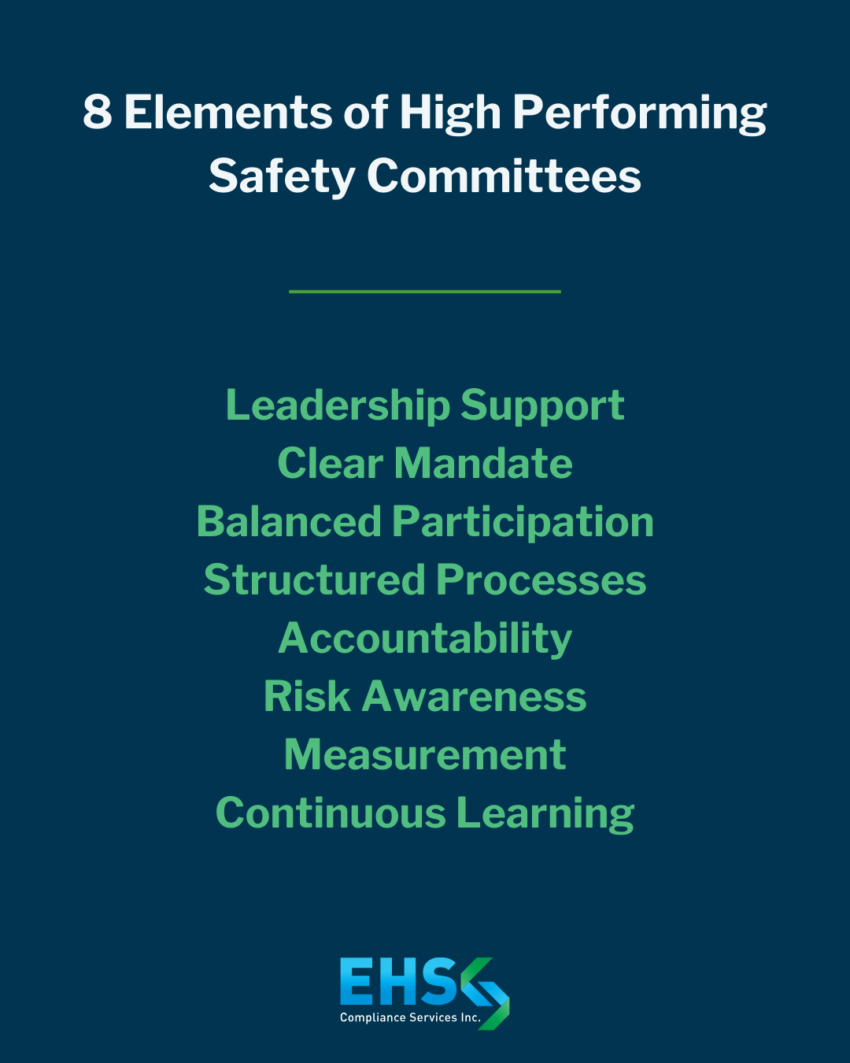
8 Elements of a High-Impact Safety Committee
In a previous article, we explored why many safety committees underperform and what high-performing ones do differently. This article builds on that discussion by outlining the elements that help safety committees move from routine meetings to meaningful impact. Most organizations have a safety committee. But relatively few have a committee that consistently drives meaningful improvements…

Why Most Safety Committees Underperform — and What High-Performing Ones Do Differently
Many organizations have a safety committee. Few have one that drives measurable impact. Committees are meant to be engines of safety leadership. Yet in many organizations, they function more like administrative review groups than strategic drivers. They meet. They review incidents. They document concerns. And then… not much changes. That’s not a commitment problem. It’s…