
When I was employed by Johnson and Johnson over a decade ago, sustainability became one of the focus areas; but, at that time, sustainability was primarily environmental stewardship of manufactured products and ensuring proper we management throughout their life cycles. The idea of sustainability has morphed into a term that includes not only the life cycle of manufactured products but also the ability of companies to identify and eliminate risk throughout their operations in a number of different areas. A sustainable company is one that effectively manages its risk profile and that extends beyond environmental impact.
While the Sustainability Accounting Standards Board (SASB) has identified 26 sustainability issues, I found the inclusion of health and safety fascinating. The concept of “health and safety sustainability” is relatively new in the grand scheme of the sustainability movement; however is completely aligned with the ongoing demands for comprehensive data from which informed decisions can be made by investors and key stakeholders. The SASB’s definition of health & safety not only includes eliminating risks and creating an environment free of injuries and illnesses but also encompasses both physical and mental health of the workforce. This speaks to wellness programs adopted by many leading organizations.
While the SASB’s metrics focus mostly on total recordable incident rate (TRIR) and days away, restricted or transferred (DART) rate, the Center for Safety & Health Sustainability (CSHS) digs much deeper in its guidance document for reporting and suggests that sustainability reports not only disclose the above incident rates but also the following metrics:
- Number of fatalities
- Percentage of owned or leased manufacturing, production, or warehousing facilities that have implemented an Occupational, Health & Safety (OHS) management system that meets nationally or internationally recognized standard or guideline
- Percentage of owned or leased manufacturing, production, or warehousing facilities that have had their OHS management systems audited
- Percentage of direct/first tier suppliers’ facilities that were audited for compliance with OHS standards.
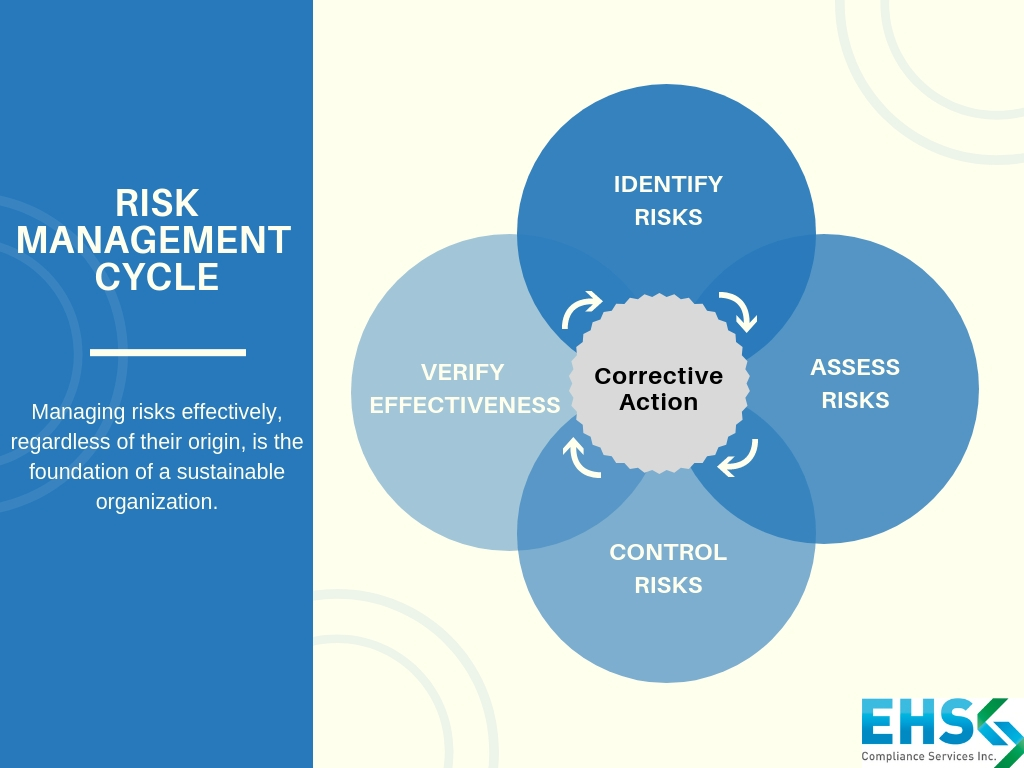
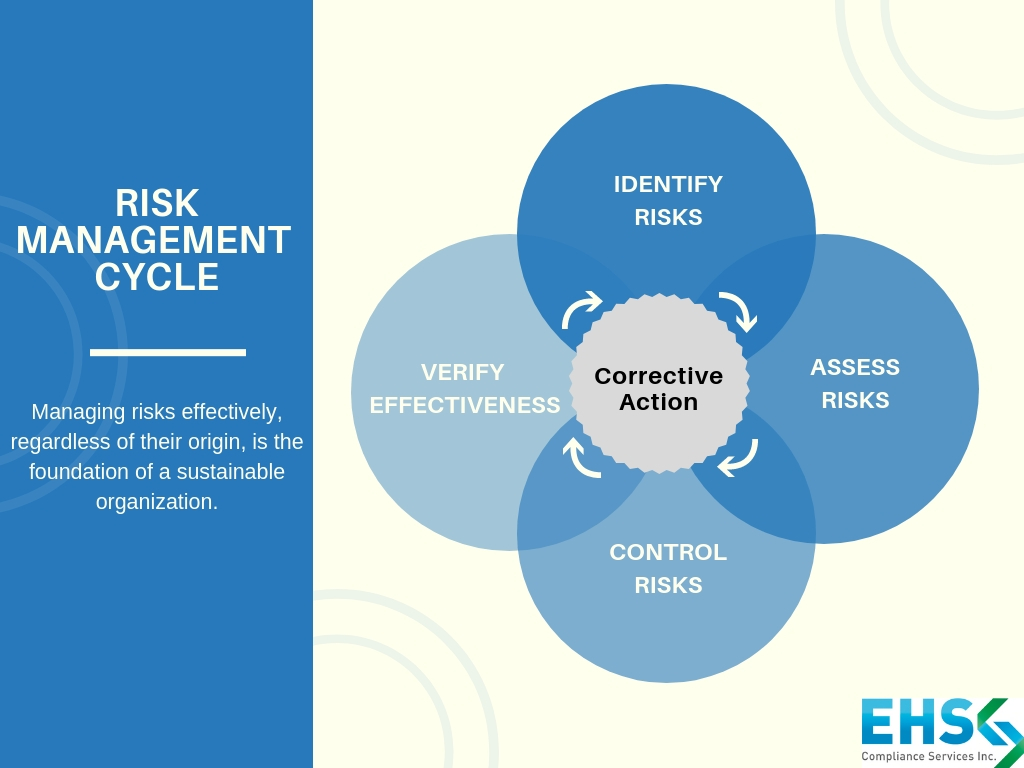
The additional metrics from the CSHS place a greater focus on OHS Management Systems because the effective implementation is a proven pathway for effective and sustainable OHS programs. The risk management cycle is a key component of most management system frameworks and provides the foundation from which sustainability can emanate. Organizational sustainability results from the effective management of risks, whether they result from defects in products, impacts to the environment, hazards affecting employee safety and health or from suppliers and vendors with which companies contract. Integration of these systems (quality, environment, safety, and supplier management among others) and leveraging resources allows sustainability to permeate an entire organization.
One of our core competencies at EHS Compliance Services Inc. is conducting Risk Assessments and designing EHS management systems. Contact us today for a complimentary consultation!