
In today’s high-stakes regulatory environment, EHS audits are more than just checklists—they’re strategic tools for risk management, compliance assurance, and corporate integrity. But what happens when the findings of those audits could expose your organization to legal liability? That’s where attorney-client privilege enters the conversation—and where many EHS leaders find themselves on uncertain ground.
Why Privilege Matters in EHS Audits
Attorney-client privilege and the related work product are legal protections designed to encourage open, honest communication between organizations and their legal counsel. When applied correctly, these protections can shield sensitive audit findings from discovery in litigation or regulatory investigations.
But here’s the catch: privilege isn’t automatic. Simply copying your legal team on an audit report doesn’t make it privileged. Nor does labeling a document “confidential.” The privilege must be intentionally structured from the outset—ideally with legal counsel directing the audit for the purpose of providing legal advice. ‘
Common Missteps That Can Break Privilege
Even sophisticated organizations can stumble. Here are a few common pitfalls:
- Retrofitting privilege: Trying to claim privilege after an audit is complete rarely holds up.
- Lack of legal direction: If the audit wasn’t initiated or overseen by legal counsel, it may not qualify.
- Mixing business and legal advice: Communications that blend operational and legal discussions can dilute privilege protections.
The Strategic Advantage of Privileged Audits
When used properly, attorney-client privilege can empower EHS leaders to:
- Conduct more candid assessments of compliance gaps.
- Explore root causes of incidents without fear of external exposure.
- Develop legally sound corrective action plans.
This approach is especially valuable in industries facing increasing scrutiny from regulators and stakeholders on ESG (Environmental, Social, and Governance) performance.
A Word of Caution
Privilege is a powerful tool—but it’s not a shield for wrongdoing. Courts can and do pierce privilege if it’s used to conceal illegal activity. Transparency, integrity, and legal oversight must go hand in hand.
Join the Conversation
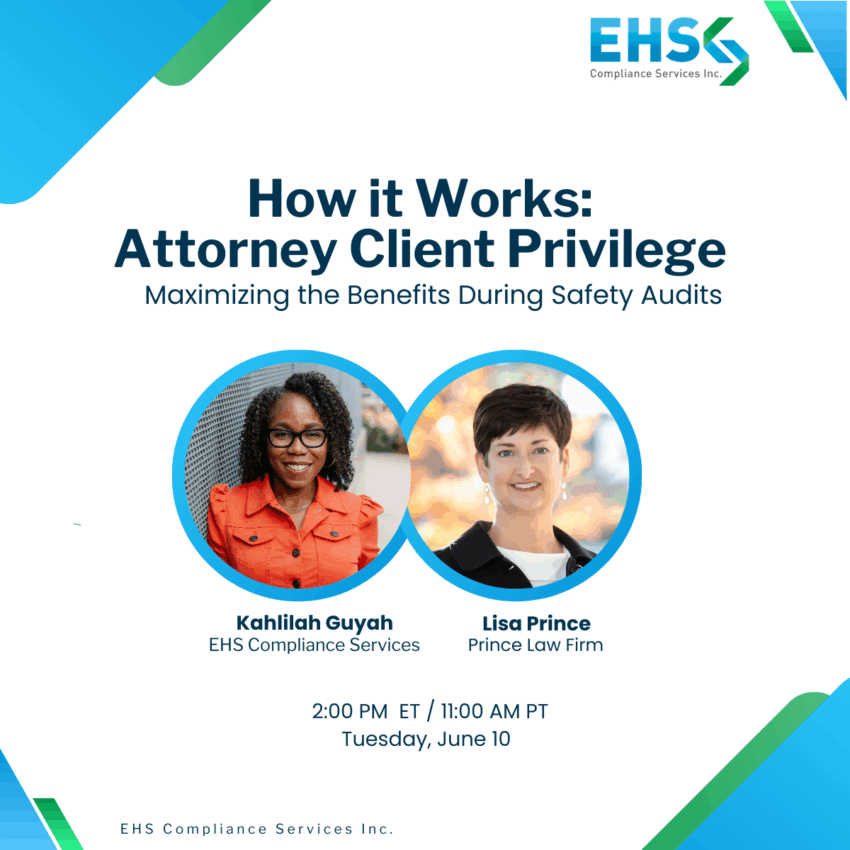
Our webinar with attorney Lisa Prince will unpack these issues in depth, featuring legal experts and EHS leaders who’ve navigated the complexities of privileged audits. We’ll explore real-world scenarios, best practices, and how to structure your audits to maximize both legal protection and operational value.
Don’t miss this opportunity to turn legal nuance into strategic advantage! We look forward to seeing you there! Need assistance with your EHS compliance or risk management journey?
Contact Us for a complimentary discussion on how we can help!