Workplace safety extends beyond physical hazards of the workplace – while easy to see they are only a portion of the safety picture. Safety extends to encompass psychological factors that impact well-being of workers. Several standards and regulations have address psychosocial risk factors including ISO 45003, Canadian and Australian regulation which provide critical guidelines for managing psychosocial risks. These factors significantly impact employee health, productivity, organizational success, physical risks – making their assessment essential for modern workplaces.
Psychosocial risk factors are elements of work design, organization, management, and the social context of work that have the potential to cause psychological and physical harm. These hazards can arise from how work is organized, social interactions at work, and the work environment itself.
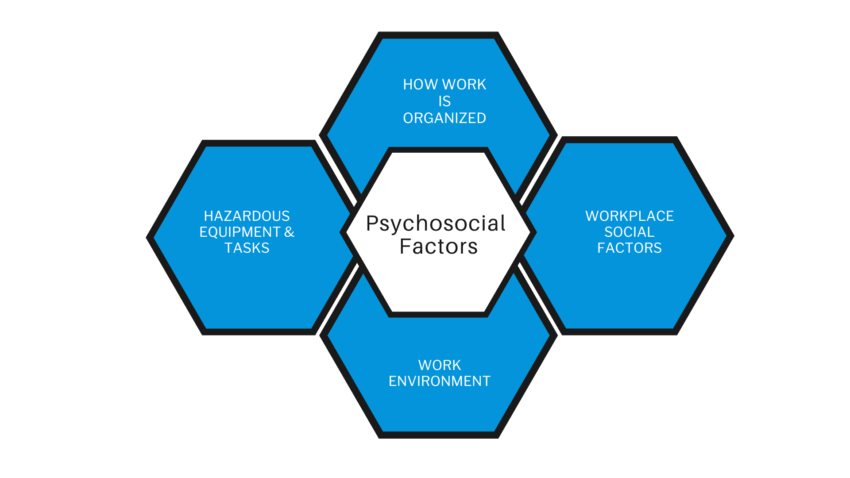
In our approach to evaluating psychosocial factors, we categorize them into four main categories:
- How work is organized
- Social factors at work
- Work environment
- Hazardous equipment & tasks

A comprehensive list of each category is detailed below, these are the factors organization should consider when evaluating their workplace.
A Comprehensive List Psychosocial Factors
While the ISO 45003 guidance document and Canadian regulatory standards list numerous psychosocial factors, research has shown there are a select number that impact the mental health of workers the most.
Psychosocial Factors that Impact Mental Health
How EHS compliance Services can help! Our 5iPHS® Methodology is here to help your organization assess and mitigate the psychosocial factors that are impacting your workplace most.
Addressing Psychosocial Risk Factors with 5i Psychological Health & Safety®
Are you ready to learn more about how EHSCSI’s 5iPHS® methodology can help your business address psychosocial factors?
Read more about 5iPHS® in our blog post, What is the 5I Methodology? or click the button below to request more information today!

2 thoughts on “What Are Psychosocial Risk Factors?”
Comments are closed.