
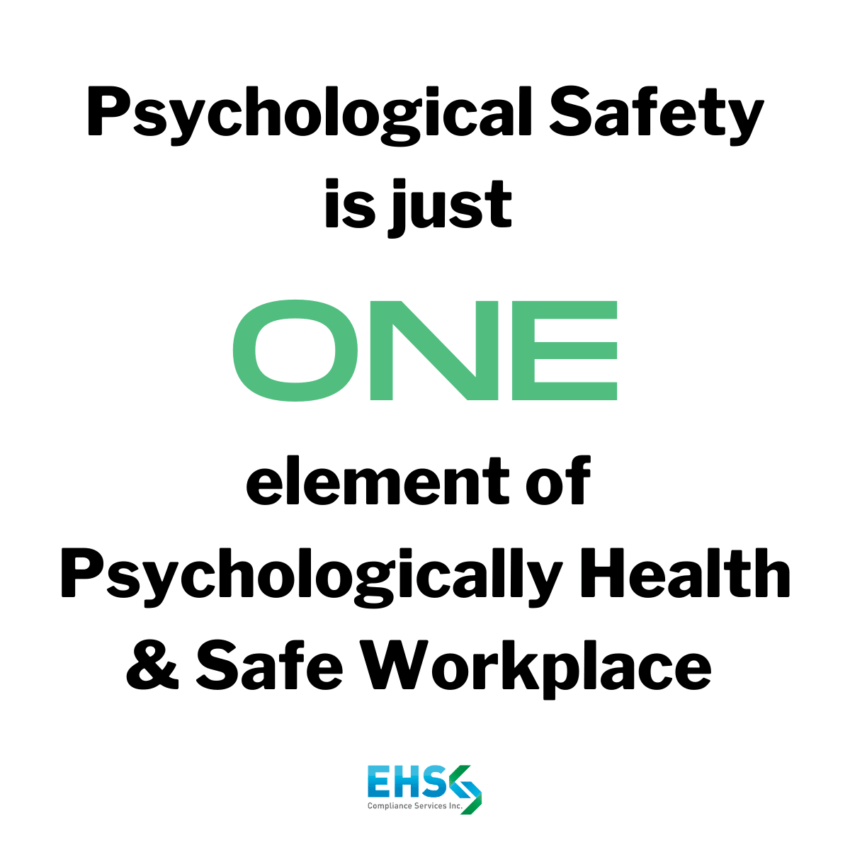
In recent years, psychological safety has become a buzzword in leadership circles, team development, and workplace culture. But as important as it is, psychological safety is just one piece of a much larger puzzle. To truly protect and promote worker well-being, we must also understand and implement psychological health and safety (PHS).
Understanding the Difference
Psychological Safety (PS) is a belief—the confidence that one can speak up, ask questions, admit mistakes, or offer ideas without fear of embarrassment or punishment. It’s a group-level dynamic, often shaped by leadership behaviors and team interactions. Amy Edmondson, a leading researcher in this space, defines it as “a belief that the workplace is safe for interpersonal risk-taking.”
Psychological Health and Safety (PHS), on the other hand, is a systematic approach to managing psychosocial risks in the workplace. It’s about preventing harm, promoting well-being, and resolving incidents that affect mental health. PHS is embedded in standards like ISO 45001 and its companion guidance document ISO 45003, NIOSH Total Worker Health, and the regulatory standards in a growing number or countries including Sweden, Canadian, Australia, and Spain among others.
Why Psychological Safety Isn’t Enough
While PS fosters openness and innovation, it doesn’t address the root causes of psychological harm— workplace psychosocial factors like excessive workload, poor leadership, harassment, or lack of autonomy control. Without a structured approach to identifying and mitigating these psychosocial hazards, organizations risk overlooking the deeper issues that affect employee well-being.
The VUCA World and the Need for Both
In today’s Volatile, Uncertain, Complex and Ambiguous (VUCA) environment, psychological safety helps teams adapt, collaborate, and innovate. But PHS ensures that the workplace itself is designed to support mental health and prevent psychological harm—through policies, resources, and leadership commitment.
Building a Psychologically Healthy and Safe Workplace
At EHS Compliance Services, we use the 5i Psychological Health and Safety® Framework to help organizations:
- Increase Competence through leadership training and mental health literacy
- Identify Hazards and Risks using surveys, focus groups, and assessments
- Improve the Risk Profile by prioritizing and mitigating high-risk psychosocial factors
- Integrate Support across multiple levels—from peer networks to EAPs and mental health professionals
- Incorporate Activities tailored to the organization’s unique challenges
Complementary, Not Interchangeable
The bottom line? Psychological safety and psychological health and safety are different—but complementary. You can’t have a truly safe workplace without both. PS creates the conditions for open dialogue; PHS ensures that what’s shared leads to meaningful change in factors that impact worker well-being.
Ready to Take the Next Step?
Creating a psychologically safe and healthy workplace isn’t just a leadership trend—it’s a strategic imperative. If you’re ready to assess your organization’s readiness, we’re here to help.
Take the Next Step
Start with our 5i Psychological Health & Safety Readiness Assessment to understand where your organization stands and what actions will make the biggest impact.