
In a previous article, we explored why many safety committees underperform and what high-performing ones do differently. This article builds on that discussion by outlining the elements that help safety committees move from routine meetings to meaningful impact.
Most organizations have a safety committee. But relatively few have a committee that consistently drives meaningful improvements in safety performance. The difference is rarely enthusiasm or effort.
More often, it comes down to how the committee is designed and supported.
High-impact committees operate with clear structure, defined roles, and a shared understanding of their purpose. They don’t simply review incidents or track corrective actions, they help their organizations identify risks, strengthen communication, and influence operational decisions.
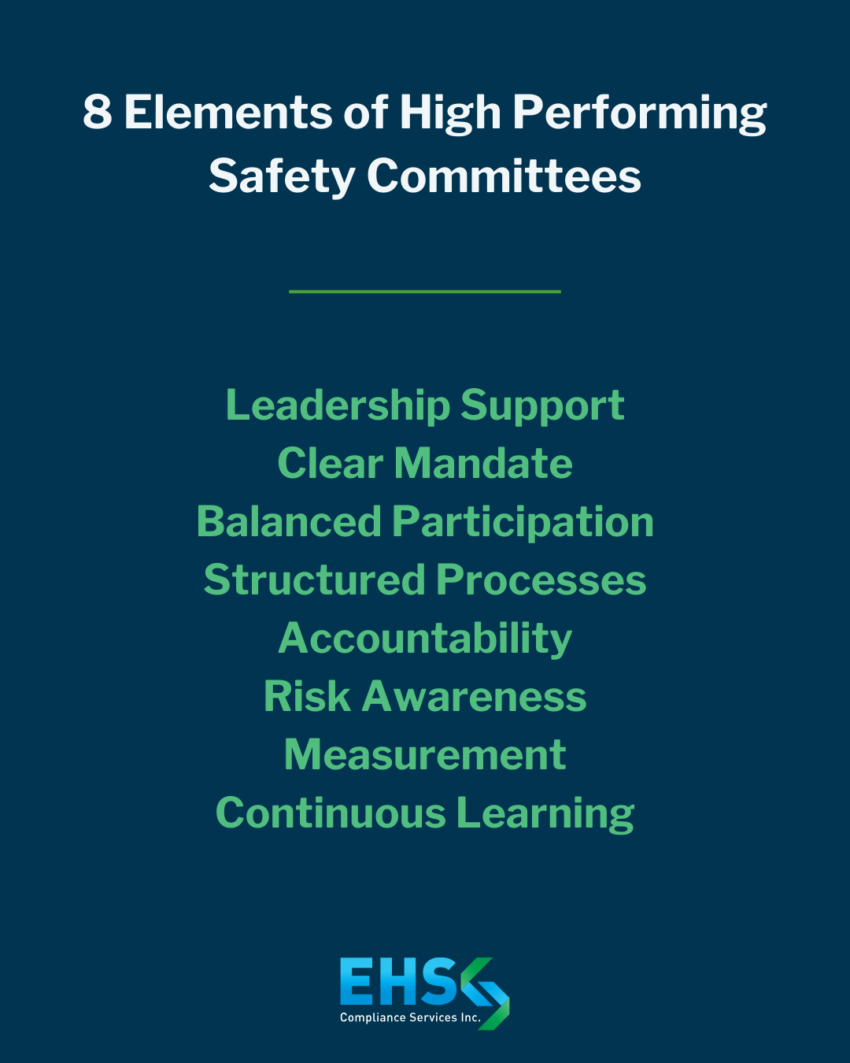
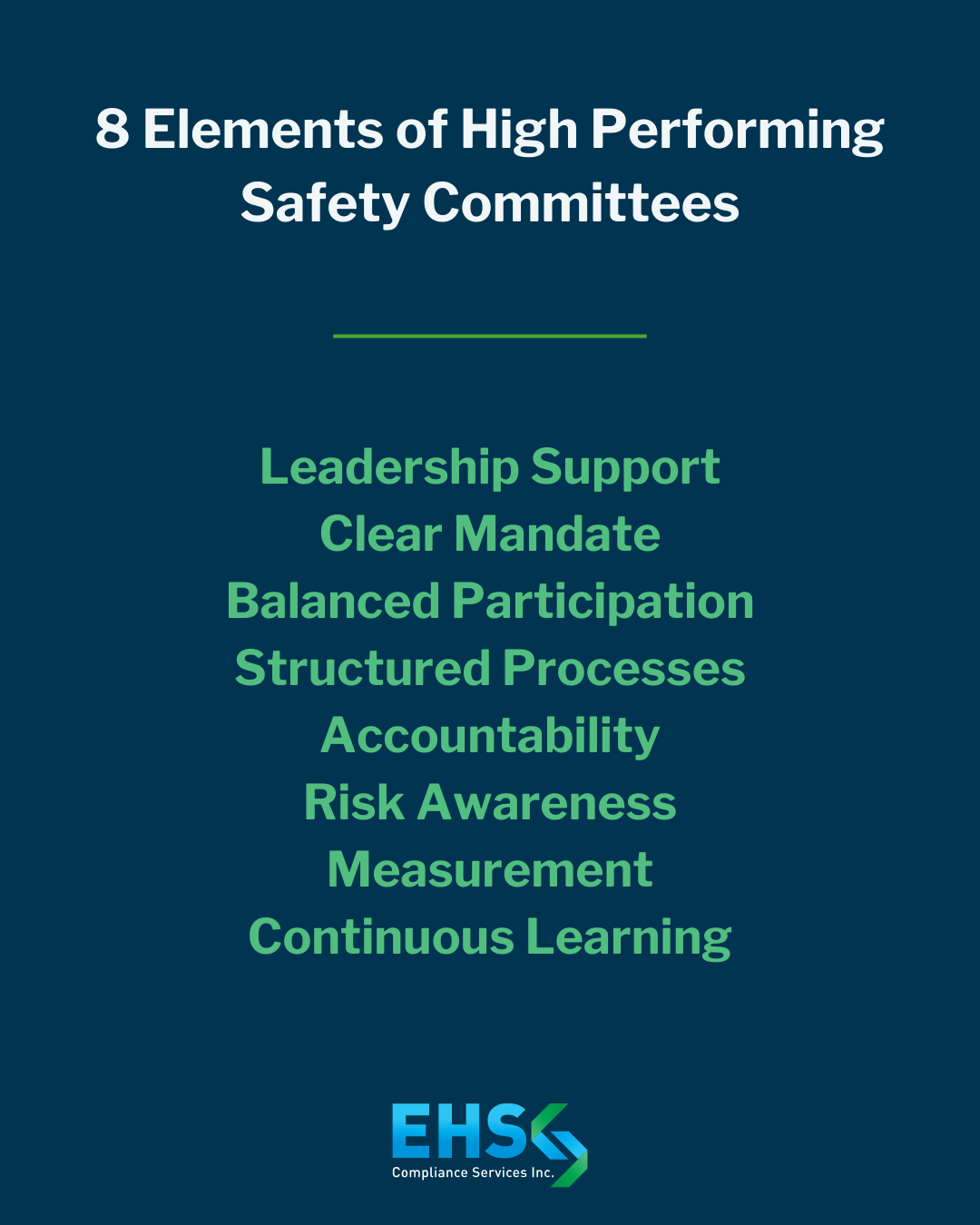
While every organization is different, high-performing safety committees tend to share several common elements.
1. A Clear Mandate
High-impact committees understand their purpose. Are they reviewing incidents? Identifying emerging risks? Driving engagement across departments? Supporting operational decision-making? When the mandate is vague, meetings often become unfocused discussions rather than structured problem-solving sessions.
2. Leadership Support and Visibility
Committees are most effective when leadership demonstrates that the work matters. This does not mean executives need to attend every meeting. But it does mean that recommendations are taken seriously, progress is reviewed, and the committee’s work connects to broader organizational priorities. Without leadership support, committees often become advisory groups without influence.
3. Balanced Participation
Effective committees bring together different perspectives across the organization. That includes operational employees, contractors, temporary workers, supervisors, and management. When participation is balanced, discussions are grounded in real operational conditions rather than assumptions. Worker participation is also a core principle embedded in modern EHS frameworks such as ISO 45001 and ANSI Z10.
4. Structured Processes
Strong committees operate with repeatable processes rather than informal discussions. Meetings follow a structured agenda, actions are tracked, and problem-solving tools are used to move beyond surface-level conversations. Structure allows committees to consistently turn observations into meaningful improvements.
5. Clear Ownership and Accountability
One of the most common challenges safety committees face is unclear ownership. Issues are raised, discussed, and acknowledged — but responsibility for action is not clearly assigned. High-performing committees ensure that actions have owners, timelines, and follow-up. Progress is visible and measurable.
6. A Broader View of Risk
Modern workplace risks extend beyond physical hazards. High-impact committees also pay attention to factors such as workload, fatigue, communication breakdowns, management of change, and organizational pressures that influence decision-making and performance. This broader perspective helps organizations identify risks before they result in incidents.
7. Meaningful Measurement
Committees should measure more than incident counts. High-performing organizations often use a balanced set of leading and lagging indicators, including participation, corrective action closure rates, hazard identification trends, and communication effectiveness. Measurement provides insight into whether the system is improving and moving toward the desired outcomes, not simply whether or not incidents have occurred.
8. Continuous Learning
The most effective committees see their role as supporting organizational learning. Near misses, observations, and operational feedback are treated as opportunities to understand how work is actually performed and how systems can be strengthened. This learning mindset helps committees move from reactive discussion to proactive improvement.
Moving From Meetings to Impact
When these elements are in place, safety committees become more than administrative groups. They become drivers for engagement, communication, and continuous improvement across the organization. Designing a high-impact committee does not require a major restructuring. In many cases, it simply requires clarifying purpose, strengthening processes, and ensuring the right people are involved.
Continuing the Conversation
While every organization’s structure and challenges are different, strengthening the design of a safety committee can significantly improve how safety information moves through the organization.
For organizations looking to strengthen their approach, we will be exploring these ideas in more detail during the upcoming session:
Safety Committees That Work: 8 Keys for Real Results
The session will focus on practical ways organizations can strengthen committee design, improve participation, and translate discussions into measurable safety performance improvements.
If you’re interested in continuing the conversation or exploring how these elements apply within your organization, you can learn more about the session here:
👉 Register here
FAQs
What makes a safety committee effective?
An effective safety committee has a clear mandate, balanced participation, leadership support, and structured processes that turn discussions into measurable safety improvements.
Why do safety committees often underperform?
Many committees lack clear authority, structured processes, and defined accountability for follow-up actions.