
Kahlilah Guyah, CSP, CHMM
CEO + Principal | EHS Compliance Services Inc.
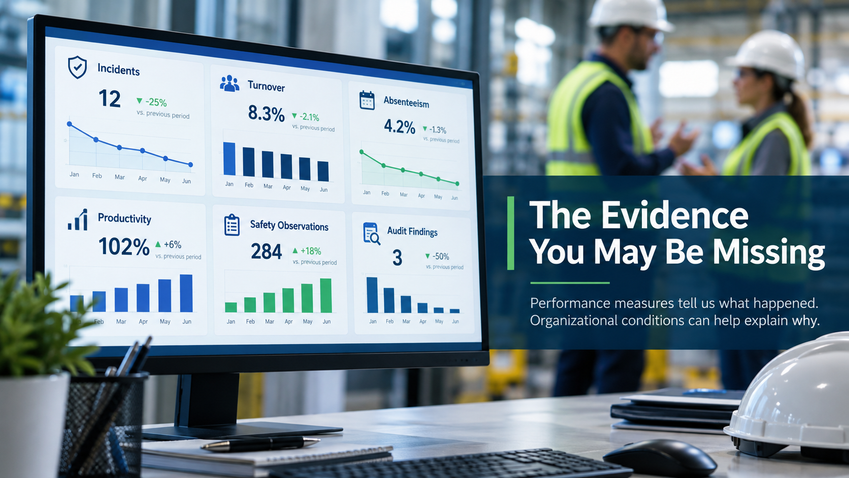
Organizations collect substantial information about performance. They track turnover, absenteeism, productivity, safety performance, employee engagement, quality, customer outcomes, and a wide range of operational metrics. Most organizations are not suffering from a lack of data.
Yet leaders still find themselves asking familiar questions:
- Why are these outcomes occurring?
- What deserves attention?
- What should be addressed first?
- Where should limited resources be focused?
- Which actions are most likely to improve or sustain results?
These questions matter because organizations operate with finite time, attention, and resources. Leaders must make decisions every day about where to invest effort, which problems to address, and which opportunities warrant action.
Yet having more information about outcomes does not necessarily provide greater clarity about the actions leaders should take. Performance measures often describe what is happening, but they do not always explain why. Understanding organizational conditions can help bridge that gap and inform more appropriate responses.
Organizational Conditions Influence Outcomes
Every organization operates within a set of conditions that shape how work is performed, decisions are made and outcomes are achieved. How work is designed, organized, supported, and managed influences the experiences of employees and the results organizations achieve. Organizational conditions may include factors such as leadership support, communication, role clarity, workload, resource availability, trust, psychological safety, and organizational change. These conditions help create the environment in which work occurs.
Consider an organization where serious injuries continue to occur despite prevention efforts. Incident data may identify the types of events, where they occur, and how frequently they happen. But those measures may not reveal whether workload, staffing, communication, supervision, or work design are contributing to the problem.
When organizational conditions are favorable, organizations are often better positioned to support performance and sustainable results. When conditions deteriorate, organizations may experience challenges that eventually appear in measures such as turnover, absenteeism, productivity, quality, safety performance, or employee well-being.
In this way, organizational conditions influence outcomes that shape organizational performance and risk.
Outcome Measures Alone May Not Reveal Those Influences
Leaders often rely on outcome measures to understand organizational performance. These measures are valuable. They help organizations identify trends, track progress, and evaluate results. However, similar outcomes can arise from very different organizational conditions.
For example, two organizations may experience increasing turnover. In one organization, turnover may be influenced by excessive workload and staffing shortages. In another, the primary issues may involve leadership practices, communication challenges, or role ambiguity. The outcome is similar. The organizational conditions influencing the outcome may be very different.
The same principle applies to many organizational challenges. Reduced productivity, declining engagement, increased absenteeism, quality issues, safety incidents, or workforce fatigue can emerge from different combinations of organizational conditions.
As a result, outcome measures often identify where performance challenges exist while providing only limited insight into the factors influencing those challenges. Understanding what happened is important.
Understanding why it happened is often what informs effective action.
If leaders respond to similar outcomes with the same interventions, they may overlook important differences in what is contributing to those results. An action that addresses a relevant condition in one organization may have little effect in another. The challenge is not simply identifying where performance needs improvement, but understanding what evidence should inform the response.
This distinction matters because organizational outcomes can have operational, financial, and strategic consequences. Turnover may affect workforce stability, productivity challenges may affect operational performance, and safety incidents may contribute to financial and reputational impacts.
Understanding Conditions Helps Inform Appropriate Responses
When leaders understand the organizational conditions influencing outcomes, they gain additional context for decision-making. This information does not eliminate uncertainty, nor does it automatically prescribe a solution. Leadership decisions still require professional judgment, organizational knowledge, and consideration of competing priorities. However, evidence about organizational conditions can provide valuable insight into factors that may be influencing performance.
When combined with relevant research and organizational context, that evidence can help leaders evaluate:
- What deserves attention
- Where resources should be focused
- Which issues warrant further investigation
- Which actions should be considered
- How performance and risk can be improved or sustained
Rather than relying solely on outcomes, leaders gain a broader understanding of the conditions that may be contributing to those outcomes. That broader perspective can strengthen prioritization, resource allocation, and decision-making.
What This Means for Leaders
Most organizations already possess considerable data about performance outcomes. The greater challenge is understanding the organizational conditions influencing those outcomes. Because organizational conditions influence the outcomes that shape organizational performance and risk, understanding those conditions helps leaders make more informed decisions about how to improve or sustain performance and manage risk.
Organizations will always need outcome measures. The evidence they may be missing is a deeper understanding of the conditions helping to create those outcomes. Before deciding what to improve, leaders might first ask:
Do we understand enough about the conditions influencing this outcome to determine where action is most likely to make a difference?
Stay Informed with Risk & Remedy
At EHS Compliance Services (EHSCSI), we help leaders understand and address the organizational conditions influencing workplace safety, operational performance, and business risk.
Subscribe to Risk & Remedy for insights on organizational performance, evidence-informed decision-making, and opportunities to turn understanding into action.